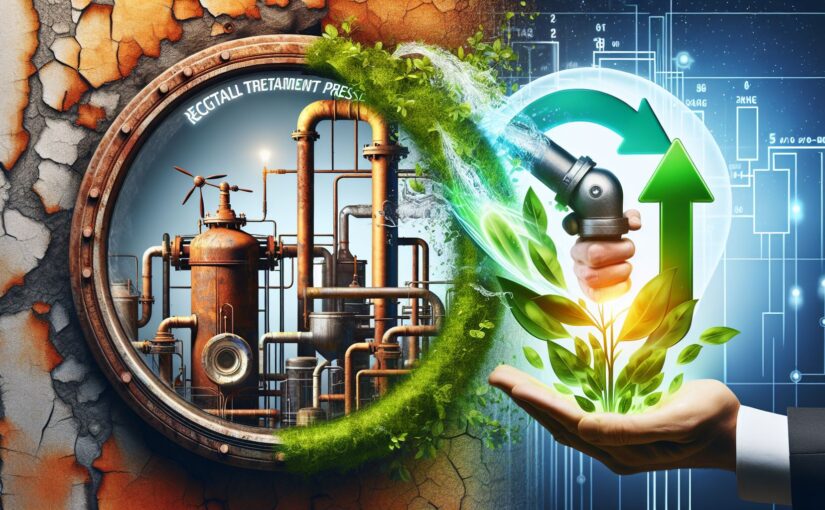
In the industrial sector, advancing technologies and stricter regulations necessitate the relentless pursuit for efficient, economically viable, and eco-friendly treatment systems. These core drivers are particularly pronounced in industries that produce significant volumes of wastewater. They must respond proactively to balance economic and ecological demands by investing in industrial wastewater treatment solutions.
Impact of Regulatory Pressure
Governments, municipalities, and environmental agencies globally mandate the treatment of industrial wastewater prior to its release into the environment. This regulatory pressure results in the constant drive for the development and implementation of efficient wastewater treatment systems.
Regulations are being put in place to limit water pollutants such as biochemical oxygen demand (BOD), chemical oxygen demand (COD), total suspended solids (TSS), and specific hazardous substances like heavy metals. Industries exceeding these limits face heavy fines or even plant shutdowns.
For instance, in the United States, the Environmental Protection Agency (EPA) regulates wastewater discharge from industrial facilities through the national pollutant discharge elimination system (NPDES). These legal constraints necessitate system upgrades to ensure compliance while minimizing operational expenses.
The Pressure to Innovate
The rigorous regulatory environment demands innovative treatment solutions to stay compliant. Therefore, regulatory pressure indirectly fuels technological advances in the wastewater treatment sector. To keep up with the current standards, industries are adopting innovative systems, such as membrane bioreactors (MBRs), advanced oxidation processes (AOPs), and electrodialysis reversal (EDR).
For example, the membrane bioreactor technology combines traditional activated sludge treatment with advanced membrane filtration. This novel system offers superior effluent quality and reduces the plant footprint, hence making it an attractive upgrade option for industries facing space constraints.
Economic Considerations
The economic aspect of upgrading treatment systems is a significant factor for industrial facilities. Upgrades often involve high capital expenditures and increased operational costs. To balance these expenses, industries may opt for systems that offer long-term cost savings. In some cases, these savings can be achieved through reduced waste disposal costs, improved water reclamation for reuse, or decreased risk of regulatory non-compliance penalties.
Operational Challenges

Alongside economic considerations, operational challenges also influence the choice of treatment system upgrades. Not every modern wastewater system can be directly incorporated into existing facilities. Thus, operations managers must consider the integration of new technologies with the existing infrastructure.
For instance, implementing a cutting-edge system incompatible with the current plant layout can demand considerable changes that may disrupt normal operations. Therefore, an upgrade decision must consider both the efficiency of the system and its fit with the existing operative framework.
The Ecological Influence
With growing awareness and concern for environmental health, industries are also driven to adopt eco-friendly wastewater treatment solutions. Sustainable practices are becoming the norm rather than the exception. Therefore, choosing an upgrade option that minimizes waste, reuses water, and lowers the facility’s overall carbon footprint is increasingly seen as a smart business decision in the long run.
Efficiently managing and treating industrial wastewater is significant for any industry. It takes into account economic benefits, operational feasibility, environmental responsibilities, and a commitment to stay ahead of the regulatory pressure.
Undeniably, pursuing more effective industrial wastewater treatment solutions presents its own set of challenges. Still, it also offers the promise of a win-win scenario: economic efficiency alongside greater ecological responsibility. As treatment system upgrades continue to evolve, they will undoubtedly continue to play an essential role in a more sustainable industrial future.