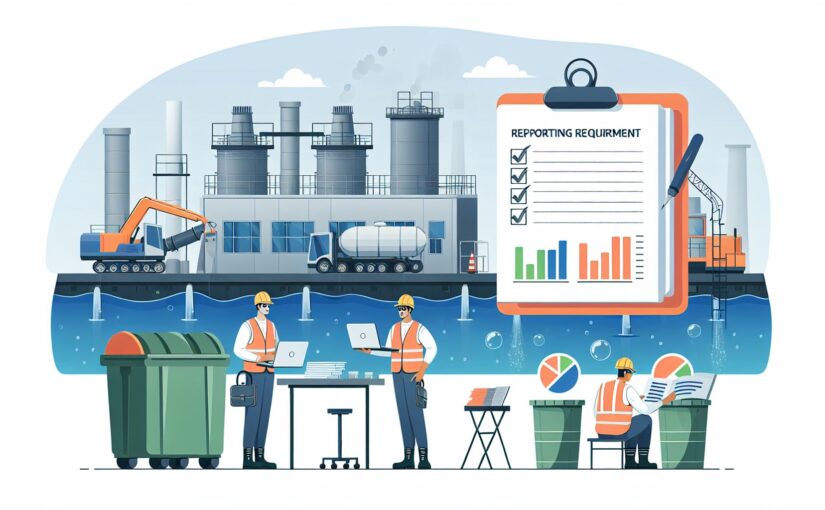
Municipal wastewater operators shoulder a great responsibility. They manage the treatment, collection, and disposal of wastewater from households, businesses, and industries. And they do so under the strict regulations of both state and federal authorities. The Environmental Protection Agency imposes reporting requirements to ensure compliance with these regulations and encourage environmental responsibility.
Understanding the NPDES Discharge Permit Program
The National Pollutant Discharge Elimination System (NPDES) is the linchpin of the EPA’s control over water pollution. Its discharge permit reporting system regulates the release of pollutants into waters of the United States by various sources, including municipal wastewater treatment plants.
Operators must submit periodic discharge monitoring reports, which detail the amounts of specific pollutants released into the environment. These reports must indicate that the volume, concentration, and quality of released effluents remain within the permit’s limits.
State-Specific Reporting Requirements
The local state or tribal authority that oversees the NPDES permit program may enforce additional reporting requirements. As such, municipal wastewater operators should familiarize themselves with these specific provisions. A reliable source of such data is the official state government website or environmental agency’s website.
For example, the Florida Department of Environmental Protection (DEP) requires comprehensive reports that detail the management of biosolids, plant performance, and groundwater monitoring.
Common Issues with Reporting Requirements
One of the most common issues with meeting reporting requirements is the absence of, or errors in, the data needed for a comprehensive report. In some instances, outdated or malfunctioning monitoring equipment may be the cause. As a result, the operators may fail to capture essential data and potentially risk non-compliance with their NPDES permit.
Incorrect or missing data may result in inaccurate reporting, leading to potential administrative penalties, fines, or even revocation of the operating permit. To prevent these outcomes, wastewater operators should routinely maintain and calibrate all monitoring equipment, ensuring it records accurate and reliable data.
Every violation, exceedance, or monitoring error must be properly reported to the responsible agencies. Transparency and honesty in reporting can help rectify issues before they escalate into serious problems.

Operational Considerations in Reporting
In addition to state and federal regulations, wastewater operators should also consider operational issues such as staffing, workload, and communication during reporting.
Staffing and workload need to be balanced to ensure the effective collection of data and the thorough completion of regular reports. A well-trained and dedicated staff ensures accurate data collection and documentation. Communication empowers teamwork and can improve the accuracy and efficiency of reporting.
Engaging in Environmental Responsibility
Beyond merely meeting the letter of the law, there are compelling reasons for diligent reporting by wastewater operators. The preservation of clean water resources and the prevention of environmental damage are collective responsibilities.
Equally, accurate reporting practices can provide local governments and communities with valuable insight into their overall environmental health and sustainability. By collaboratively working with state and federal authorities through transparent reporting, wastewater operators become key contributors to their community’s environmental well-being.
Accurate and timely reporting are critical to wastewater operations. It ensures that appropriate steps are taken to minimize environmental impact, maintain safety standards, and promote healthy and sustainable communities. By understanding and implementing all necessary reporting requirements, wastewater operators can uphold their commitment to environmental responsibility.
In conclusion, municipal wastewater operators play a crucial role in preserving our environment. Optimal performance not only involves treating, collecting, and disposing wastewater but also requires adhering to essential reporting requirements set by the EPA and state authorities. With the right data, tools, and commitment, wastewater operators can effectively meet these requirements and contribute significantly to their communities’ environmental health.